In the opening line of “The Waste Land” (1922) T.S. Eliot calls April “the cruelest month.” This line attracts attention because April is a spring month when nature begins to wake up from winter and new life emerges. Calling it “cruel” is unexpected. One morning this month, as I waited in the fast food drive thru for my morning coffee, I considered the cold, gray day and it did feel kind of mean. It was a long winter this year. A blizzard seemed to roll in every weekend. For months, I’ve been dreaming of spring. A few weeks ago we started getting outside again, visiting parks to look for birds and the sprouts of spring ephemerals. I’ve been desperate for flowers. But most of April’s days this year have been overcast and cold, like winter cruelly refusing to leave. I feel what Eliot calls the “mixing” of “memory and desire.” I remember the flowers and need to see them again.
I’ve started drawing flowers. I made a zine about flowers that I hope to soon share on this website. Most nights, I’m thinking of flowers before falling asleep. I watched the new PBS documentary about Henry David Thoreau. I learn more about Thoreau’s work at his family’s pencil manufacturing business. The program emphasized how Thoreau turned to nature for wisdom, not so much to help him understand nature, but to help him understand how to survive society. Many point out how Thoreau’s cabin at Walden Pond was near town, and that friends like Ralph Waldo Emerson visited frequently. Thoreau wasn’t out in the wilderness. The minimal cabin and serene setting helped draw Thoreau’s attention to the simple, accessible beauties of nature. His time in the woods was about awareness. Drawing a cartoonish orchid on my iPad, I’m starting to understand. Out in the cabin, questions of how we spend time and whether our minds are at peace would float in and out of our consciousness. Like an inflatable raft drifting across a lake.
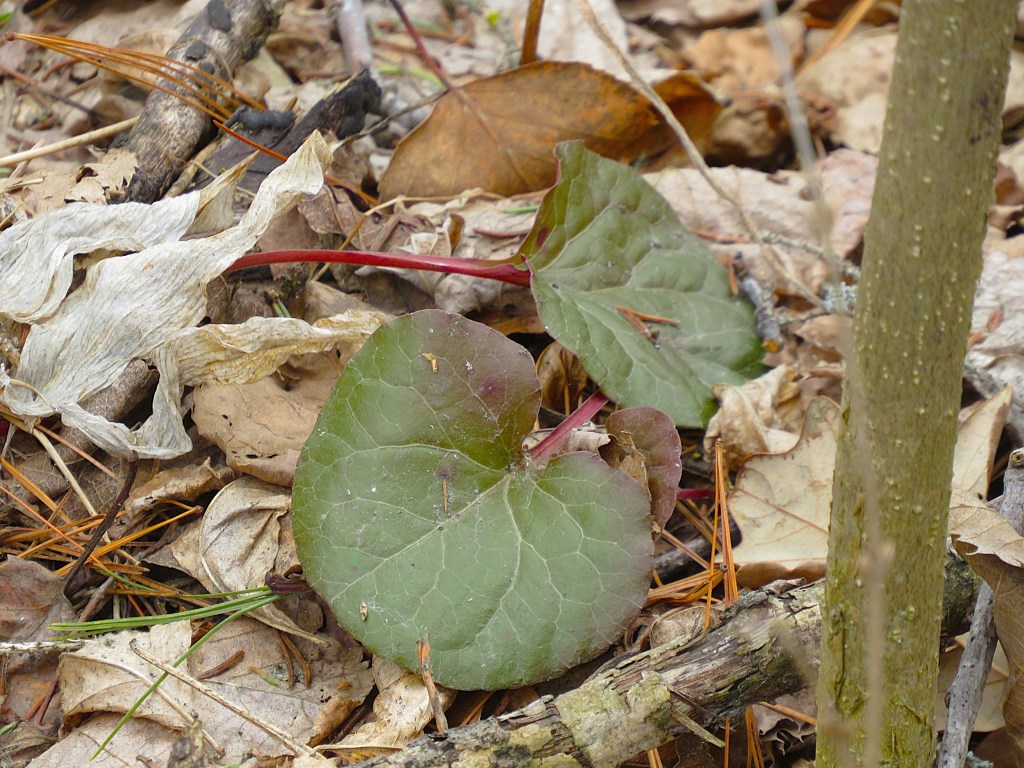
Canada Wild Ginger, Asarum canadense, Lake Bemidji State Park. Photo by Danielle, April 2026.
There’s a meditative quality to flowers. Like mandalas, flowers exhibit repetition and symmetry. We can spend time with flowers. Seeing a magnificent bird is often a brief experience. A flower can’t fly away. A few weeks ago, I went to the woods alone for the first time ever. Until last summer, my fear of snakes kept me out of the woods. I might go a short distance with family or friends. Taking a trail alone was unthinkable. But flowers helped me break free. Flowering has also become an intellectual journey. I learn the names of flowers and feel like I know them. They too are alive. I see a fragile blossom, drooping in perfect shade, and feel like I’ve gazed upon the essence of transcendentalism. I reach for fat, paperback textbooks from my college courses on Emerson, Fuller, Hawthorne, Melville, Thoreau.
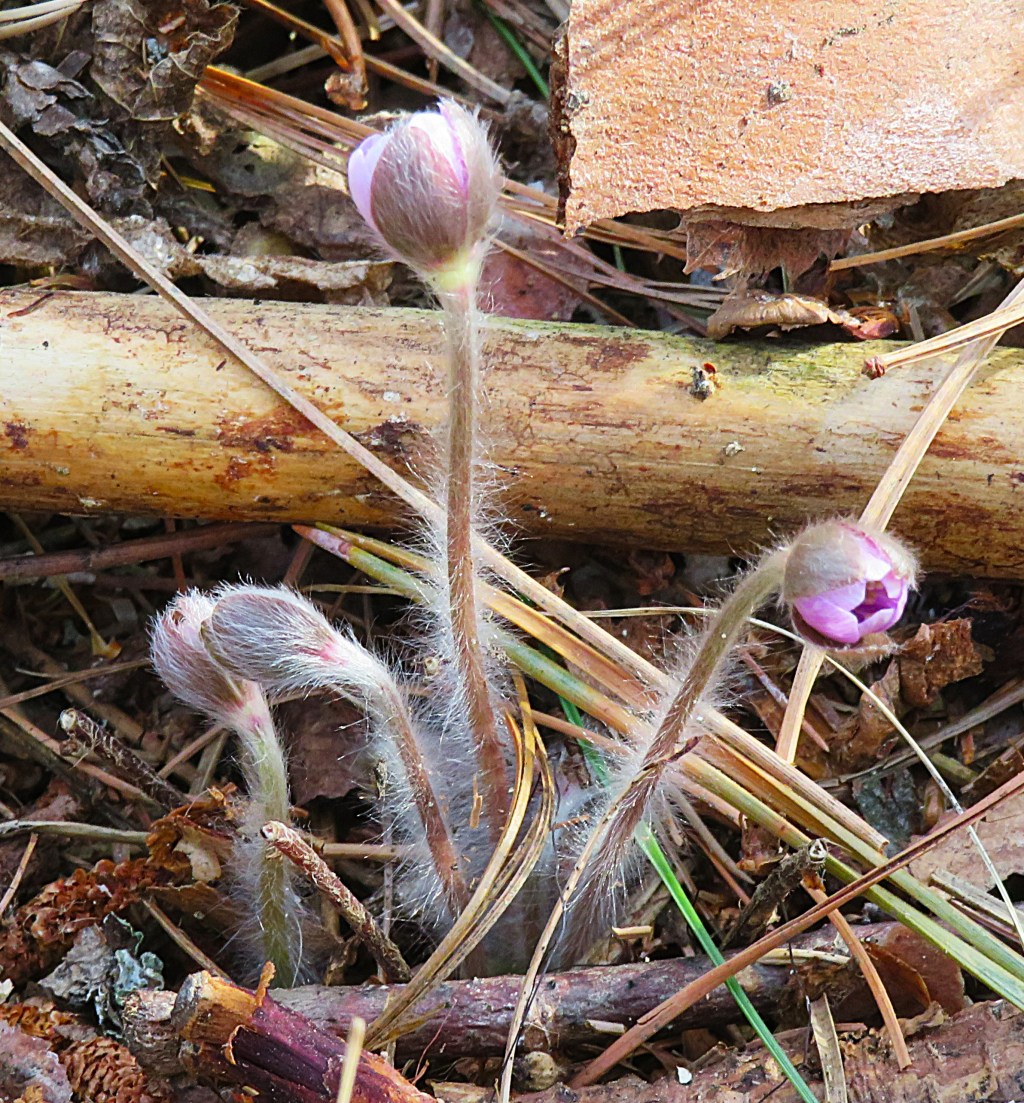
We saw our first spring flower last week: Round-lobed Hepatica, Hepatica americana, at Lake Bemidji State Park. My husband was walking ahead of me in the path and said he’d found a flower. It was alone and purple on a hairy stem. I felt happy. The stem emerged from a pile of twigs and dead leaves and pine needles. The first image in “The Waste Land” is one of lilacs breeding “out of the dead land.” The little purple flower has broken through. Down the trail, we find more of the same flowers: some white and some lavender. They’re lovely and adorable. I treasure them as jewels.
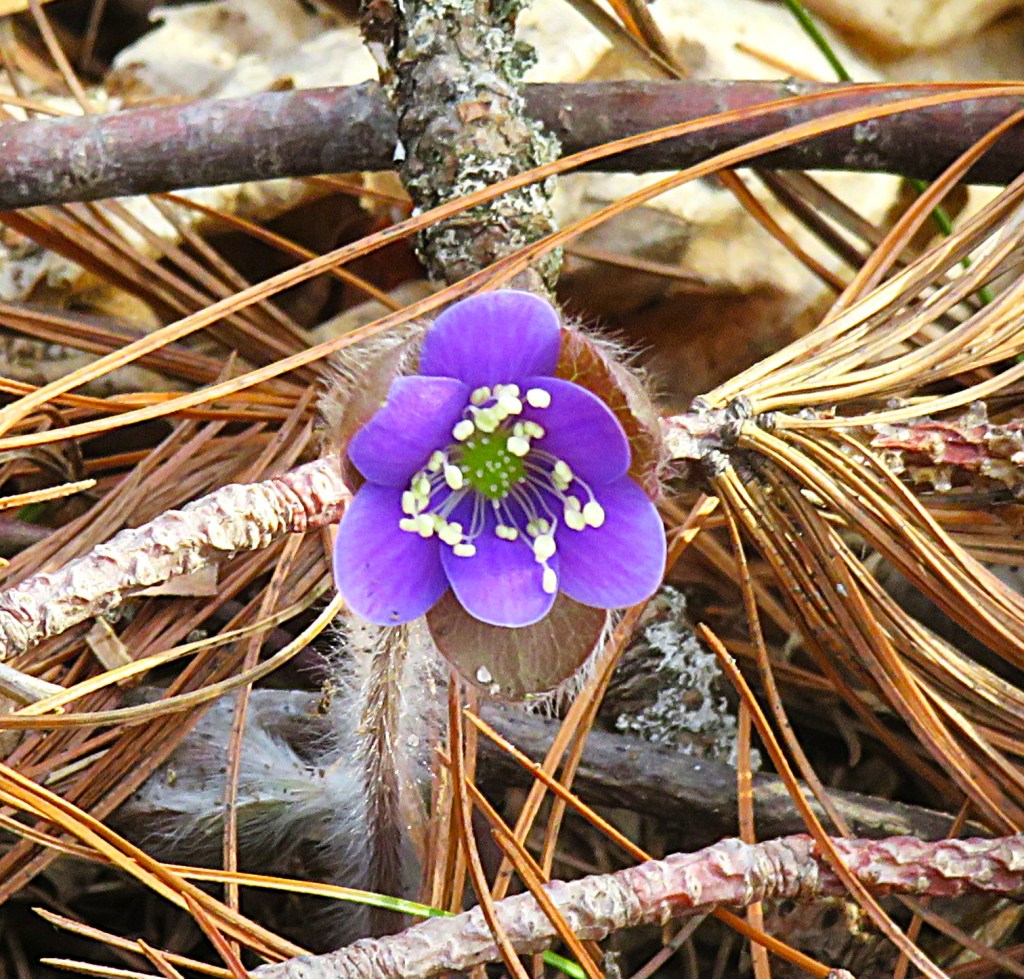
Round-lobed Hepatica, Hepatica americana, Lake Bemidji State Park. Photo by Danielle, April 2026.
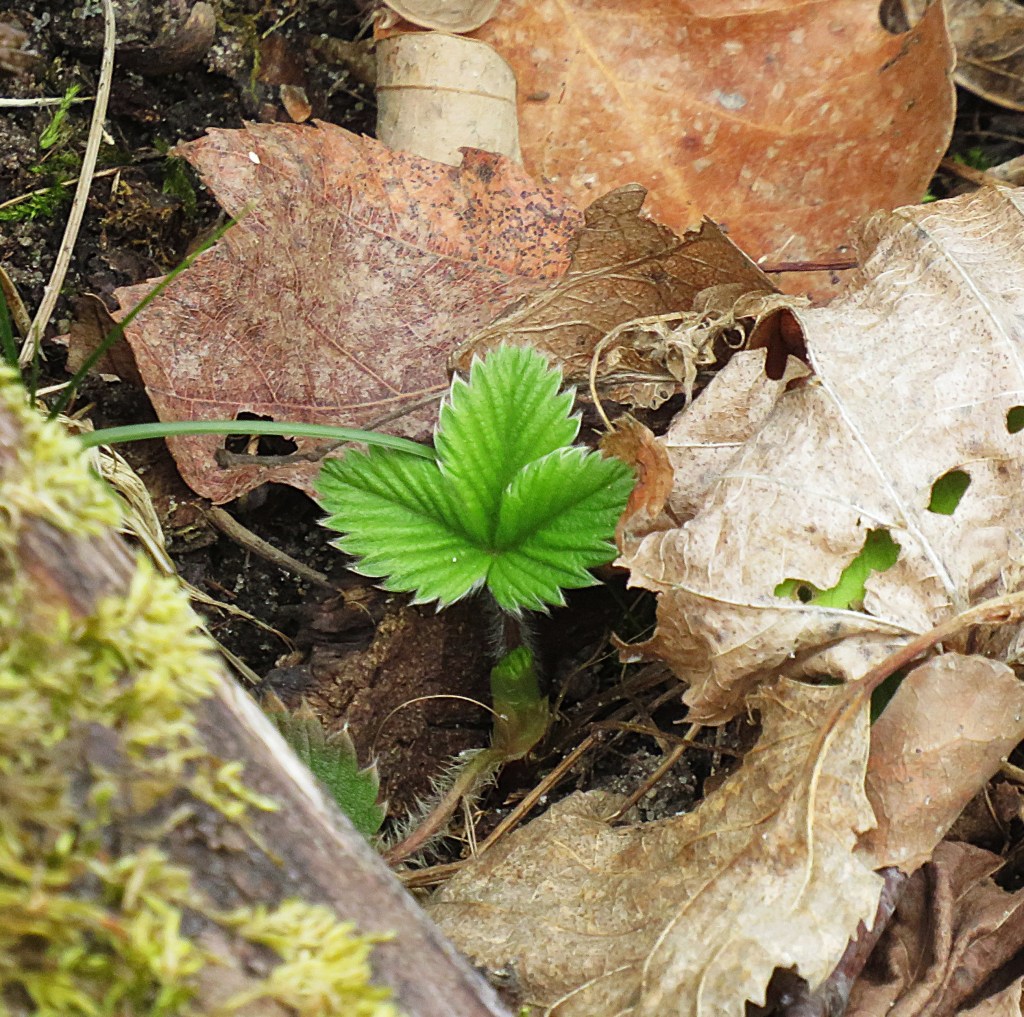
Wild strawberry, Fragaria vesca, Lake Bemidji State Park. Photo by Danielle, April 2026.
I’m more confident now, outdoors. Heading out on a trail, I often have moments where I consider turning back, or feel the ophidiophobia (fear of snakes) set in. But now I keep going. Being alone in the woods felt surreal. I felt vulnerable. I feel excited by wood ferns, Dryopteris, and the sprouting leaves of wild strawberry, Fragaria vesca. I want to learn more about lichens and mosses. I’m photographing more fungi. Shopping online, I take a chance on a bold fern necklace with a fiddlehead bail. The word fern sounds like the shade beneath fronds and the airy ease of a warm day. Maybe pollen floats past like nature’s dust in the sunlight.
It’s a good time for birding. We’ve already seen a couple of Belted kingfishers (Megacyrle alcyon) this spring. Near Bemidji, two Osprey, Pandion haliaetus, nest on a metal platform. We’ve seen Osprey before, often in large, dramatic nests near water. American kestrels, Falco sparverius, the smallest falcons in North America, perch on signs and wires. We see kestrels often, but they can be difficult to photograph. Fox sparrows, Passerella iliaca, visit our birdfeeders. A pair of House finches, Haemorhous mexicanus, has claimed the little nest near our back door. This morning, the male finch sat at the top of one of our yard trees, singing.
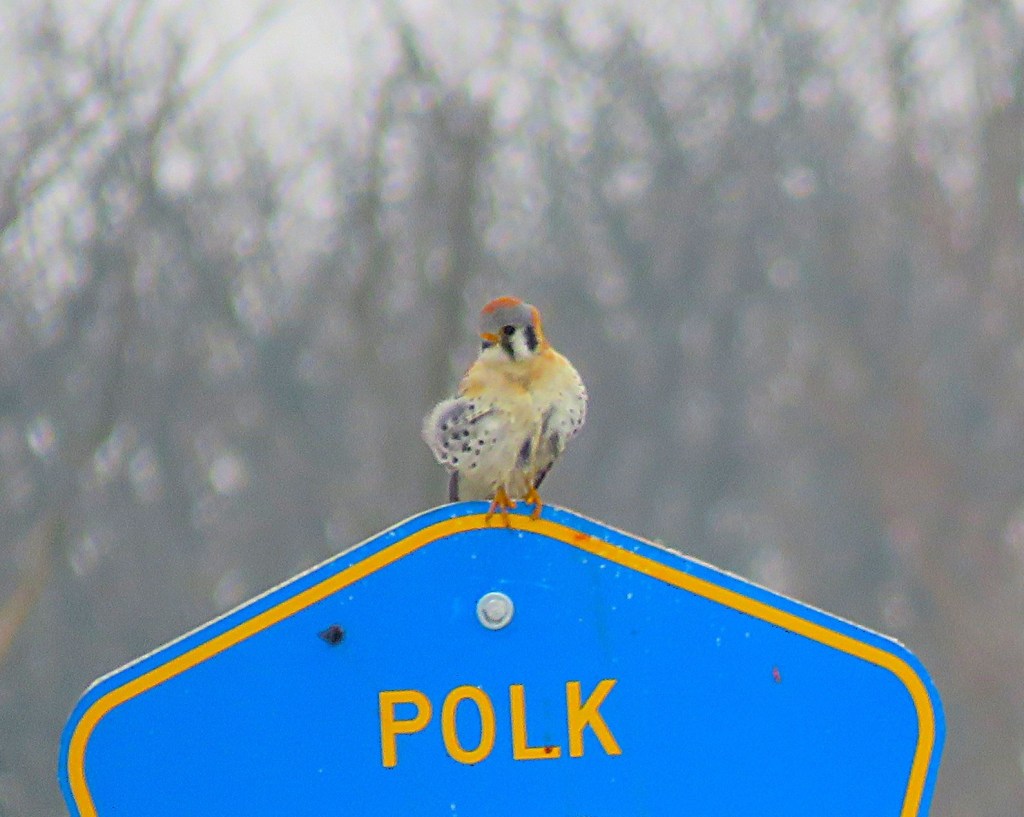
American kestrel, Falco sparverius, Polk County, MN. Photo by Danielle, April 2026.
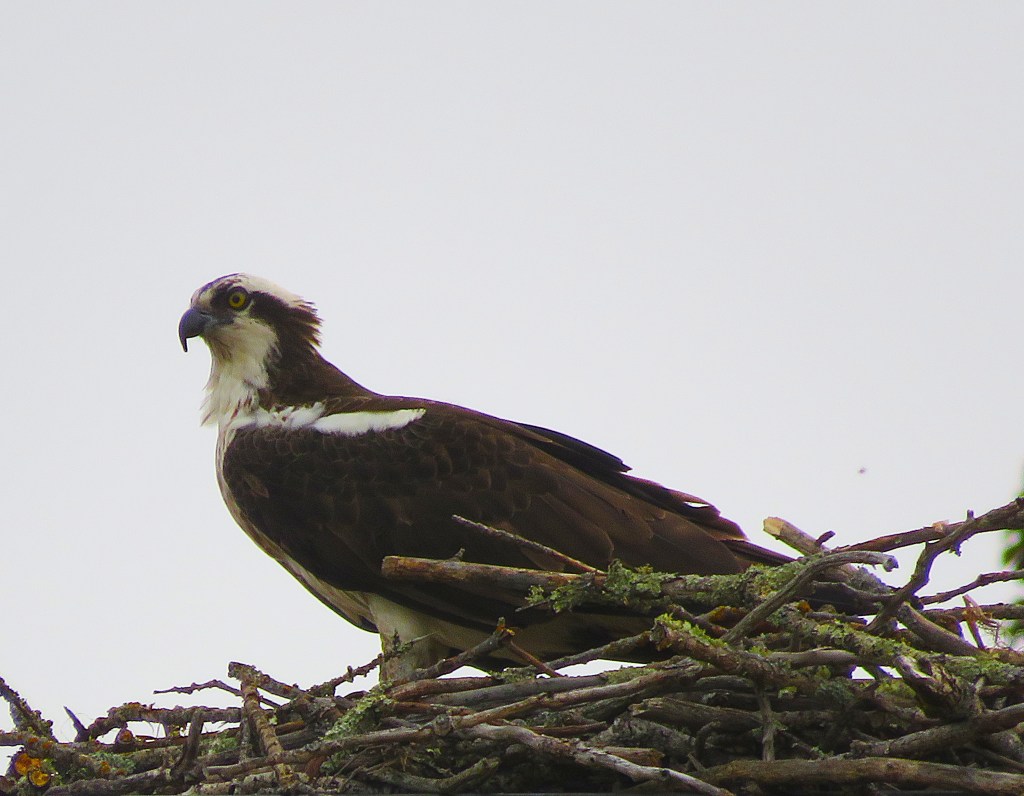
Osprey, Pandion haliaetus, Bemidji, MN. Photo by Danielle, April 2026.
In the past week or so, the heart-shaped leaves of Canada white violets, Viola canadensis, have taken off at the base of our fence. I remember seeing last year’s first violets and thinking maybe I could write something about wildflowers. Last weekend, I visited my hometown in eastern South Dakota. As kids, we spent a lot of time playing outside, linking together the stems of plucked dandelions, making a crown or a necklace. I wonder what flowers grew in our town that I never noticed or cared about. I liked the humid tent of the local greenhouse. I knew a lot of the plants that lived there by name: geraniums, petunias, snapdragons, zinnias.
Driving west on Highway 2, we see a North American beaver, Castor canadensis, enter the ditch. It’s clearly a beaver: I’ve never seen one in the wild. These are the kinds of moments that keep us driving around, looking for birds and animals. There’s a safe place to pull over, and I’m able to get a few pictures of the beaver. It swims quickly, diving and weaving in the flooded, swampy ditch. It slaps its tail and we drive away. Across the highway, a lodge is visible. Farther west, a North American river otter (Lontra canadensis) surfaces from a hole in a sheet of melting ice. While the face of the otter resembles the beaver, the otter is smaller with a longer tail typical of a weasel.
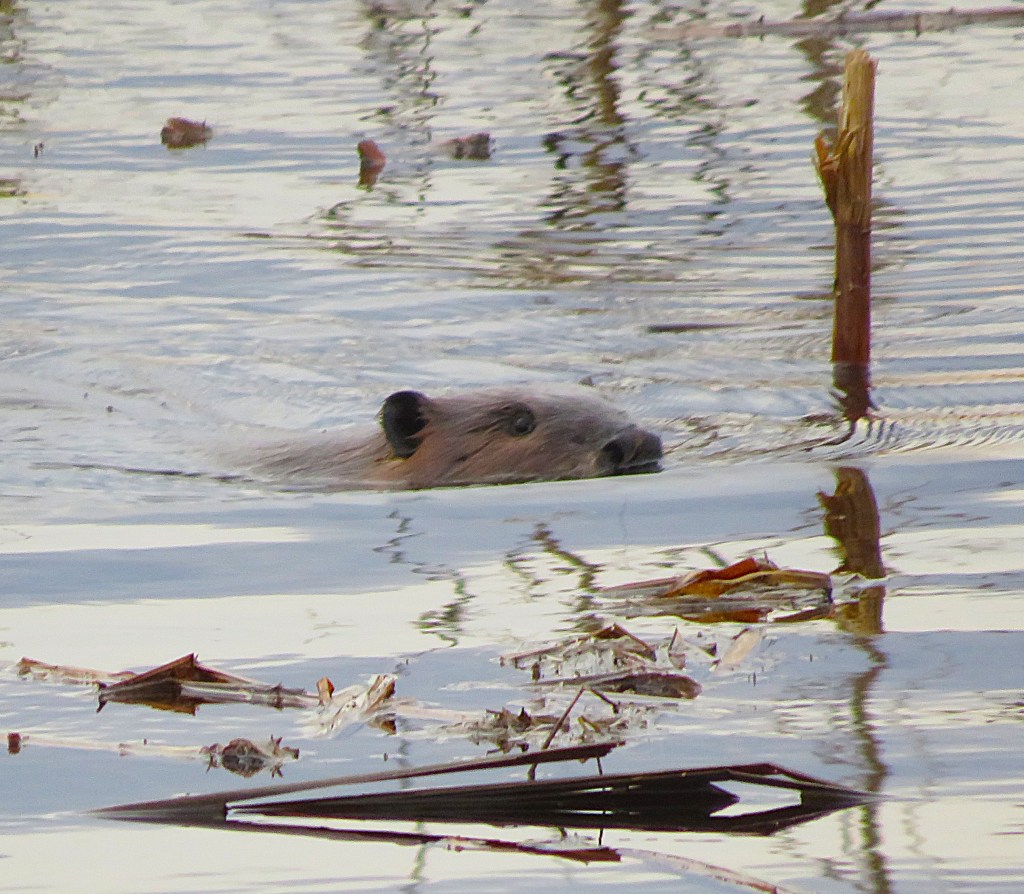
North American Beaver, Castor canadensis, Polk County, MN. Photo by Danielle, April 2026.
Another school year is ending. Last year, the first few weeks of May were incredibly stressful. I started journaling more and working with affirmations. I remember my affirmation from last year. It includes the word “journey.” A peaceful pathway lined with plants, perhaps rain-slicked, too early and cool for reptiles. Tomorrow is the first day of May. Our hound is ready for an adventure. We’re heading south toward Nerstrand-Big Woods State Park, where the Dwarf Trout Lily, Erythronium propullans, is blooming. It’s a rare plant–federally endangered–and grows only in Minnesota. The state park updates page says the park is muddy in places. I have my pink, waterproof boots. A humble pencil. A flowering book. Perhaps a necklace or crown.


 Danielle Dreams in Wildflowers
Leave a comment