A few nights ago, I had a dream about water on the prairie. It’s a recurring dream I’ve been having for many years. I’m driving on a rural, two-lane road, during the summer. It’s daytime and I drive over a hill. Coming over the hill, I see the slough on both sides of the road has flooded. The road is under water. A sense of confusion hits me, along with some fear. Something about the water flooding the road feels terrifying. That’s usually where the dream ends. But this time I drove through the water without even thinking. I had strangers in the car. We made it to the other side.
It’s been a while since I had this dream. Every time, the setting is the middle of nowhere summer prairie, on a narrow road surrounded by wetlands. I grew up in eastern South Dakota, in the heart of the Prairie Pothole Region. Stretching across much of the Northern Plains into Canada, the country throughout this area is characterized by tall grass prairie and grassland plants mixed with wetland “potholes” and agricultural fields. Out on the prairie, sometimes it seems like all I can see is the big, blue sky and an infinite cornfield, like Ray Kinsella’s field of dreams. Then I see a Great Blue Heron, Ardea herodias, land at the edge of a slough. A rumble of thunder. A hot July rain. Silently, wildflowers boom in the ditches. In time, prairie inhabitants learn there’s a lot to take in here.
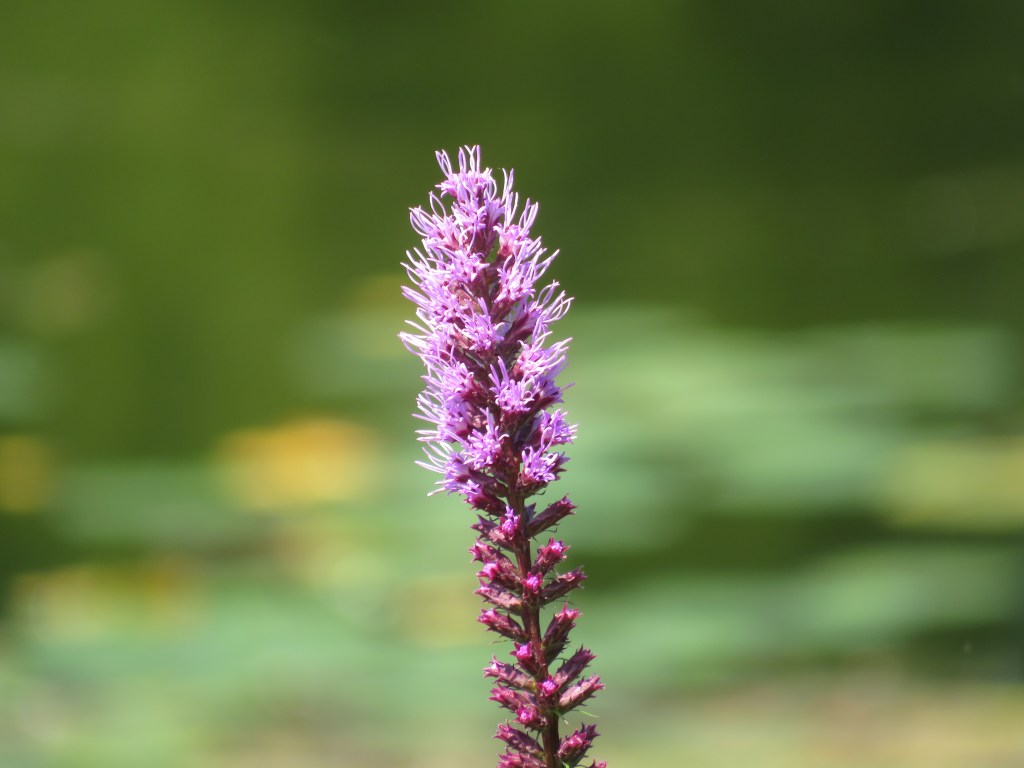
Prairie Blazing Star, Liatris pycnostachya, Park Rapids, MN. Photo by Danielle, July 2024.
We recently visited one of the most impressive prairie landscapes in Minnesota: Buffalo River State Park near Moorhead, our sixteenth state park of the year. Our hound stops at the ranger station to collect his park patch. This one features a prairie chicken. The Minnesota Department of Natural Resources website promises that this park is ideal for flowering, with hundreds of different plant types flourishing. I see a perfect example of Upright Prairie Coneflower, Ratibida columnifera. While the yellow petals are bright and obvious, I learn from Minnesota Wildflowers that the cone part of the flower is also covered in tiny flowers. I see thousands of Purple Prairie Clover, Dalea purpurea, an icon of the Great Plains. I like the word clover; it reminds me of magic. Purple Prairie Clover mixes with other members of the legume family: White Prairie Clover, Dalea candida and Lead Plant, Amorpha canescens.
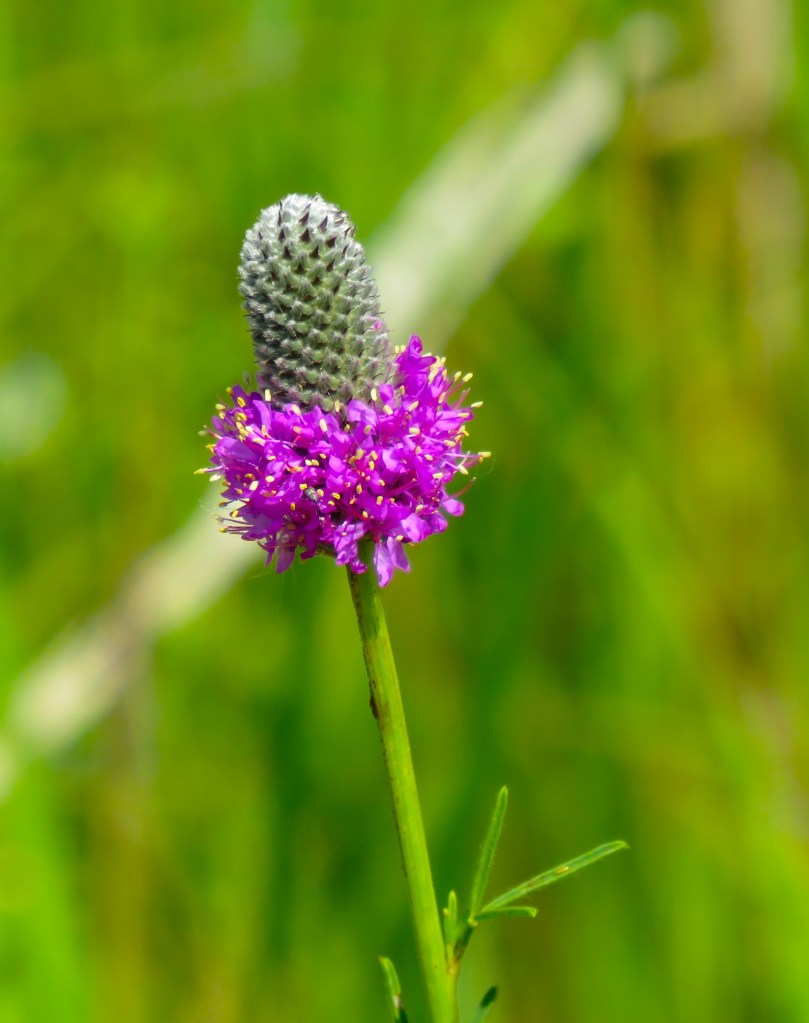
Purple Prairie Clover, Dalea purpurea, Buffalo River State Park, MN. Photo by Danielle, July 2025.

Upright Prairie Coneflower, Ratibida columnifera, Buffalo River State Park, MN. Photo by Danielle, July 2025.
I wander around, patiently looking. It takes time to see the diversity. I notice lots of silvery plants, somewhat bushy, with classic, pointed-oval leaves in a shape I might carve into rubber stamp. Metallic hairs cover most of Silverleaf Scurfpea, Pediomelum argophyllum. According to Minnesota Wildflowers, these hairs explain the plant’s silver look. I see flowers: they’re small, in a shade of royal purple. Another member of the legume family, Silverleaf Scurfpea is a common prairie plant that grows throughout the central United States and Canada. The “scurf” part of the name reminds me of “Smurf,” the blue comic characters invented by Peyo in the late 1950s. Coincidentally, a new Smurf movie was just released. I browse the “The Smurfs” Wikipedia page and learn that Smurfs have a favorite plant: sarsaparilla, Smilax ornata, which traditionally grows in Central America and Mexico.
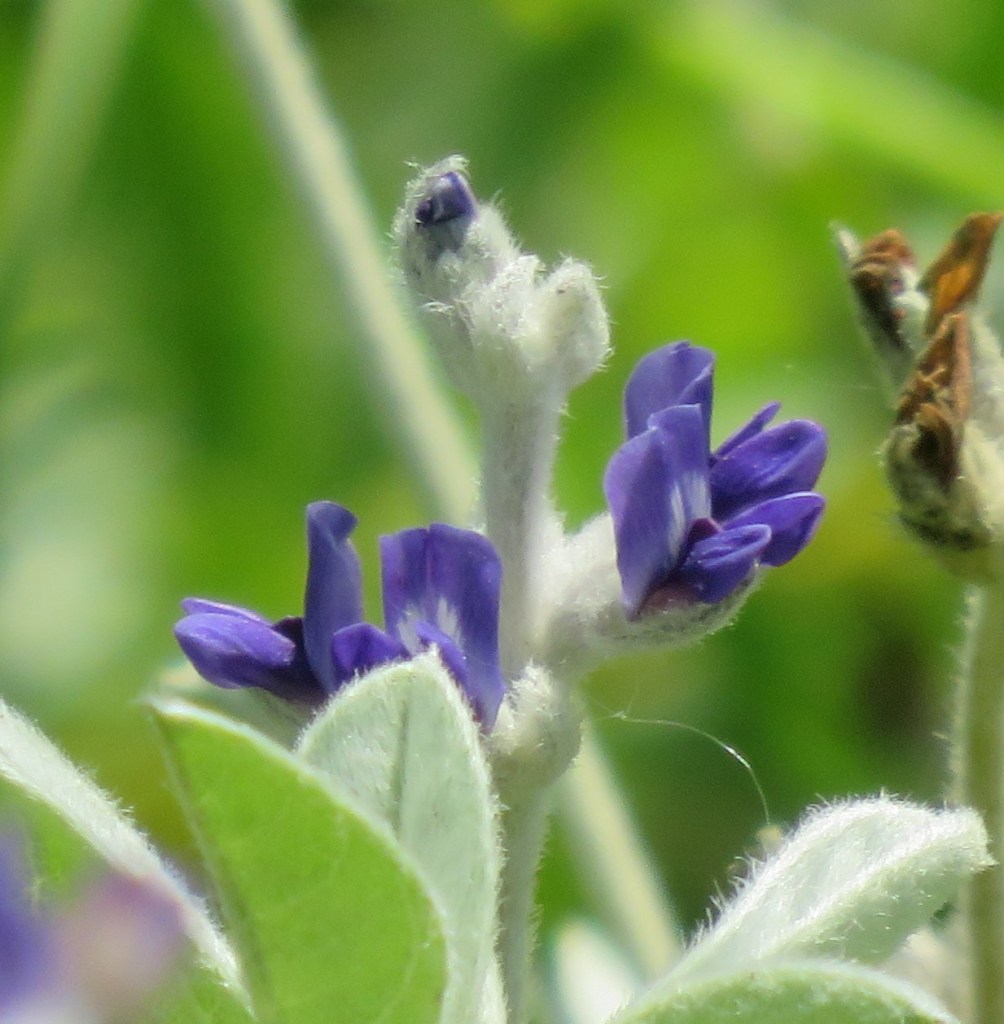
Silverleaf Scurfpea, Pediomelum argophyllum, Buffalo River State Park, MN. Photo by Danielle, July 2025.
Buffalo River State Park is just east of Moorhead, in Clay County, MN. The Minnesota State Historical Society website explains that the first European inhabitants of present-day Clay County were Norwegians who settled along the Buffalo River. Today, the Hjemkomst Center in Moorhead offers some awesome exhibits, including a replica of the Hopperstad Stave Church in Vik in Sogn, Norway. Inside the Hjemkomst Center Museum, visitors can check out the Hjemkomst Viking Ship. The ship was the dream of a man named Bob Asp, and actually made a voyage from Duluth to Norway. I learn from the Historical and Cultural Society of Clay County that “hjemkomst” means “homecoming” in Norwegian. My maternal great-grandparents came to the United States from Norway around 1914, and Norwegian traditions are part of our family history. We had sandbakkels and lefse at Christmas and learned a few words and songs, like “takk for maten” (thank you for the food), “velkommen” (welcome), and “hilsen fra Norge” (greetings from Norway).
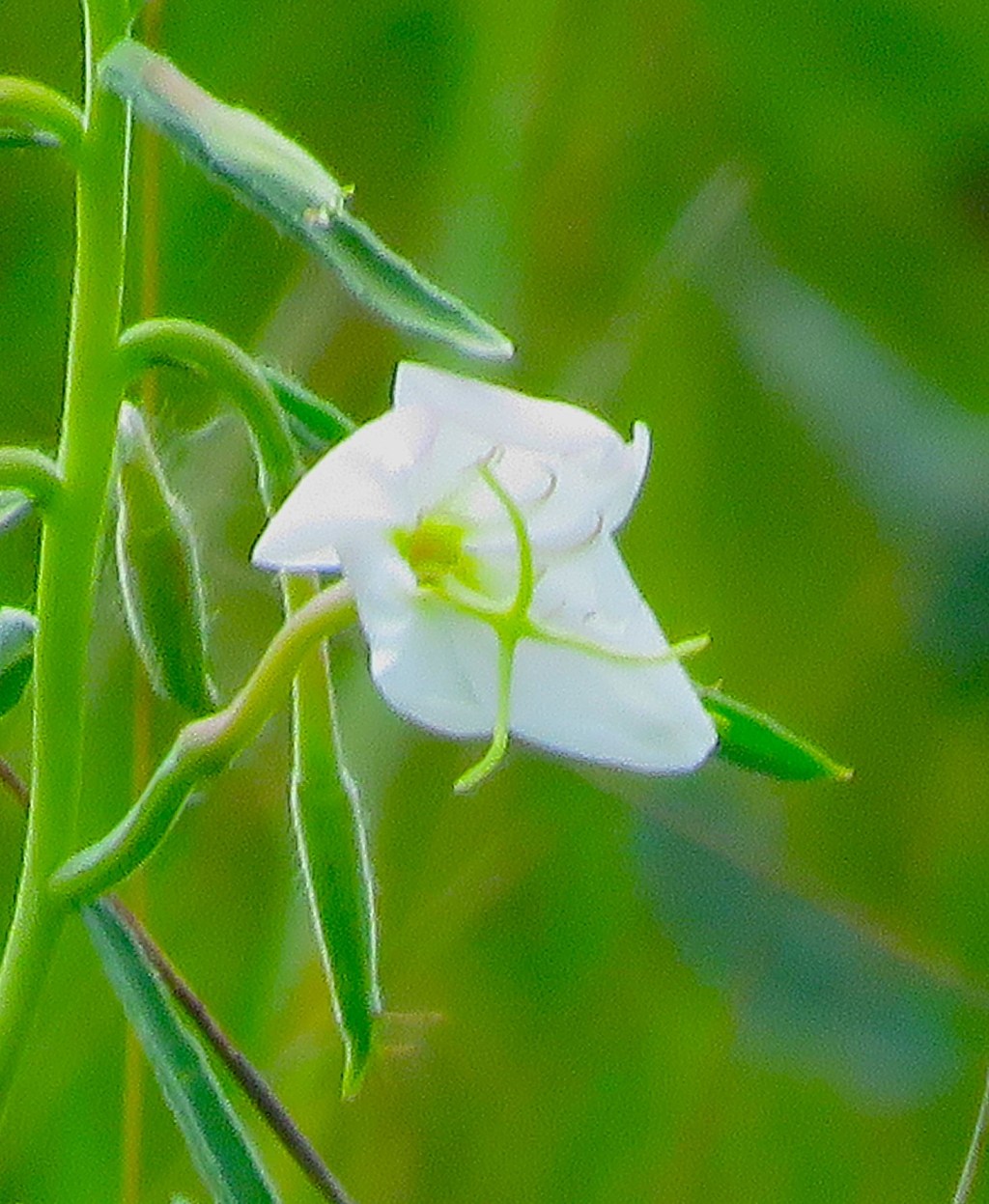
My grandma loved birds and flowers. She knew quite a few plants by name. I wonder what wildflowers bloom in the Gudbrandsdalen Valley of Norway, where my great-grandparents were born. The Norwegian word for “flower” is “blomst.” “Wildflower” is “villblomst.” Examining the jumbled explosion of prairie plants, I notice something unusual, a plant by itself, with leaves that resemble green beans. I see one white flower with a prominent stigma. Nuttall’s Evening Primrose, Oenothera nuttallii, is a member of the Evening Primrose family. Last summer, I observed Common Evening Primrose, Oenothera biennis, in bloom at Big Bog State Recreation Area. Like Common Evening Primrose, the flowers of Nuttall’s Evening Primrose open in the evening and close during the day. It’s early afternoon when I see the open flower. It’s a simple, joyful surprise: like finding out the used bookstore is open on a Sunday, when you happen to be passing through town.

Nuttall’s Evening Primrose, Oenothera nuttallii, Buffalo River State Park, MN. Photo by Danielle, July 2025.
Driving home from Buffalo River on Highway 32 north, we pass several wildlife management areas abundant with cattails and ponds. One of my favorite birds, the unmistakable Belted Kingfisher, Megaceryle alcyon, perches on a power line. We stop at Heiberg Park in Twin Valley to check out a bridge that crosses Mashaug Creek. I see another new flower, purple and large, with wavy petals. Behind each petal is a cylindrical, balloon-like tube. The shape of the plant resembles the shape of Bladder Campion, Silene vulgaris, an invasive plant we often see in Polk County. I’ve discovered Allegheny Monkey Flower, Mimulus ringens, a flower described by Minnesota Wildflowers as unlike anything else in Minnesota.
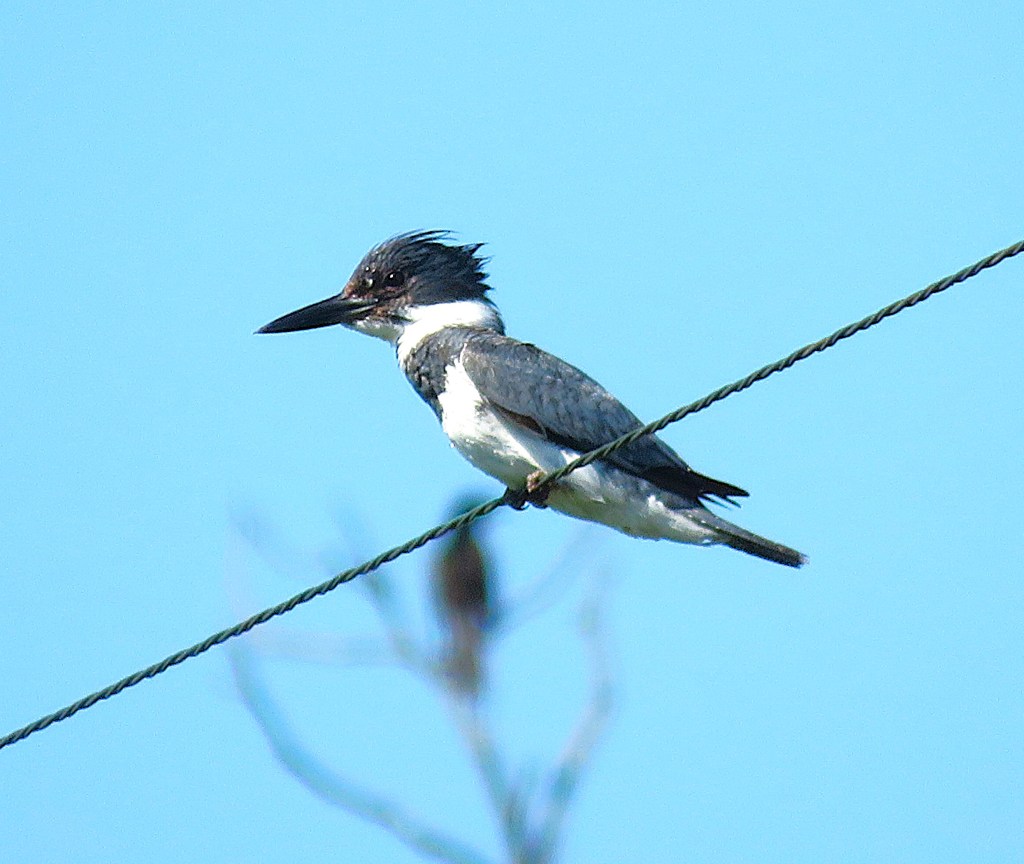
Belted Kingfisher, Megaceryle alcyon, Norman County, MN. Photo by Danielle, July 2025.
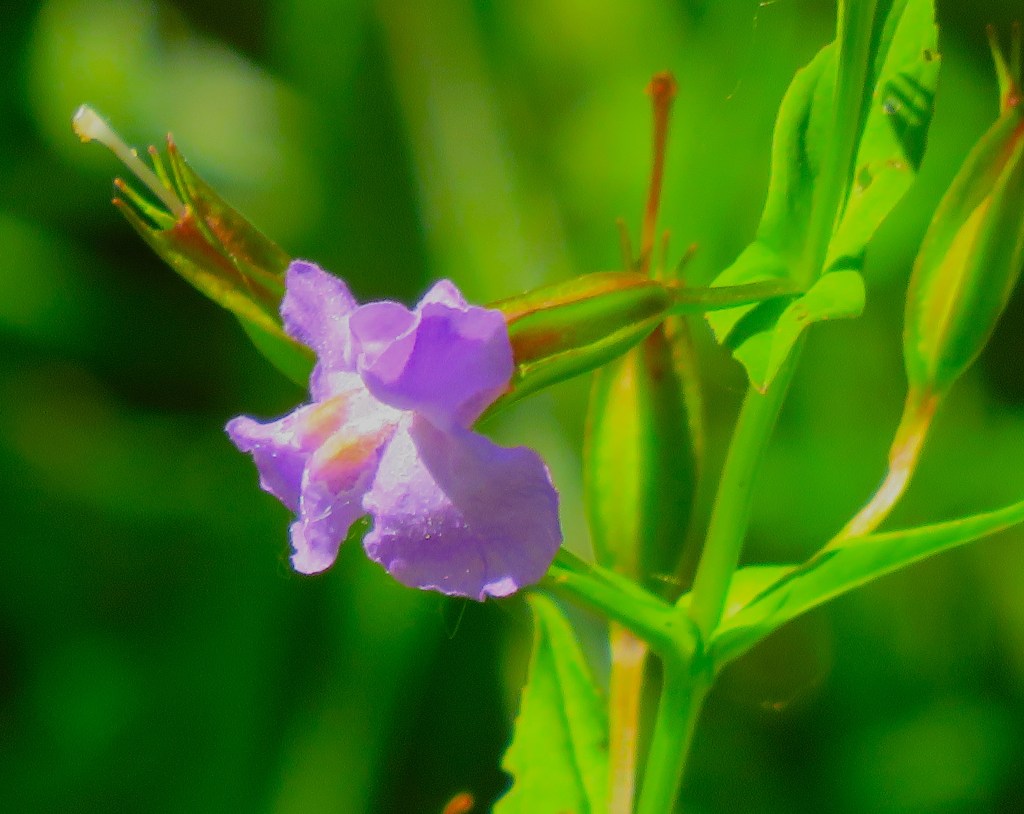
Allegheny Monkey Flower, Mimulus ringens, Twin Valley, MN. Photo by Danielle, July 2025.
It’s been a year since I saw the field of blue flowers in Lake of the Woods County. I believe they might have been some kind of flax plant. As in my recurring dreams, I came over a prairie hill and saw water. Except the sea was a sea of blue flowers glistening in the bright sun. Now I’m glistening with sweat and a suntan, hunting for “blomst” along the Mashaug Creek. I haven’t seen a snake all summer. I’m sure some night I’ll dream again of the flooded road. Maybe I’ll pull over and take a few pictures. I can almost hear the voice of a relative, maybe my grandma, encouraging me not to panic. The waters will recede. You’ll make it back home in time for a good night of sleep.


 Danielle Dreams in Wildflowers
Leave a reply to Danielle Cancel reply