Seeing in color is one of my favorite parts of being alive. Encountering flowers and other treasures from nature often involves a thrilling glimpse of a standout color. Spring has returned to Minnesota. Snow mountains are melting into slush season. Last week, I spotted the first American robin (Turdus migratorius) of the year, hanging out on our backyard fence. Lately, we’ve awakened at night to the sounds of coyotes (Canis latrans) yip-howling from the shelterbelt across the field from our home in Polk County. Our hound alerts, ready for another warm season. Roused from winter dreams, he’s sniffed out the aroma of spring: the promise of wildflowers.
We didn’t see many notable birds this winter. A Red-bellied Woodpecker, Melanerpes carolinus, frequented our primary birdfeeder. One evening, driving north on Highway 75, we spotted a Snowy Owl (Bubo scandiacus) on a road sign just off the highway. I saw my first Snowy Owl in December 2012, driving east on Highway 14 through my home state of South Dakota. I had a brand new camera and saw a white bird on top of a power pole. Since then, we’ve seen many Snowy Owls, along with Great Horned Owls (Bubo virginianus) and a Northern Hawk Owl (Surnia ulula). My grandma loved owls. Seeing one feels like magic.
Last month, on a still day, we took a short walk through the wooded area along the Sandhill River near Fertile. Most of the river was open and flowing, but it was a frozen day. I took one of my favorite photos of the winter: a natural arch frosted with snow, like the site of an elven wedding. I photographed tiny animal tracks and the husks of last year’s flowers, longing for them to turn green. I see a lot of beauty in winter. The enchanting vibe of the holidays brings back sacred memories. The new year, like a jewel unboxed on Valentine’s Day, feels like the gift of a new beginning.
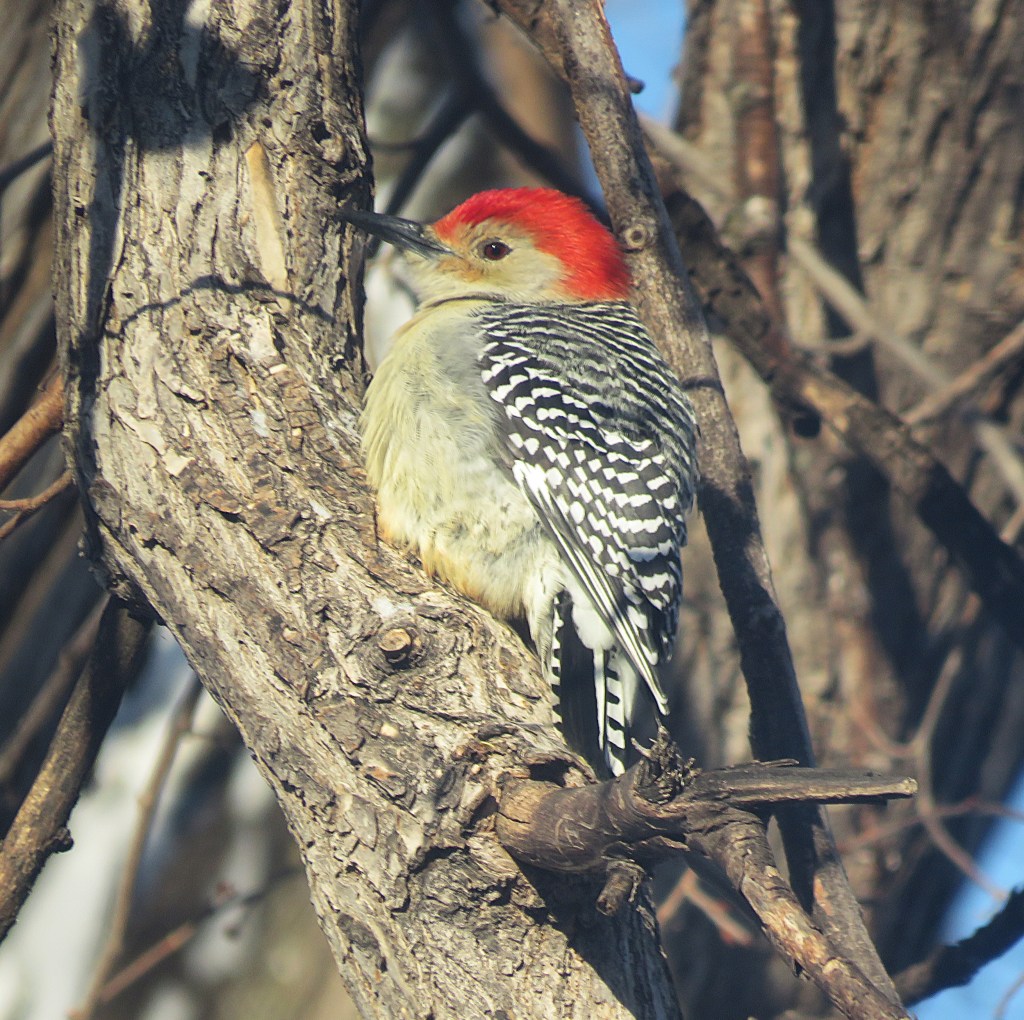
Red-bellied Woodpecker, Melanerpes carolinus, Polk County, MN. Photo by Danielle, December 2025.
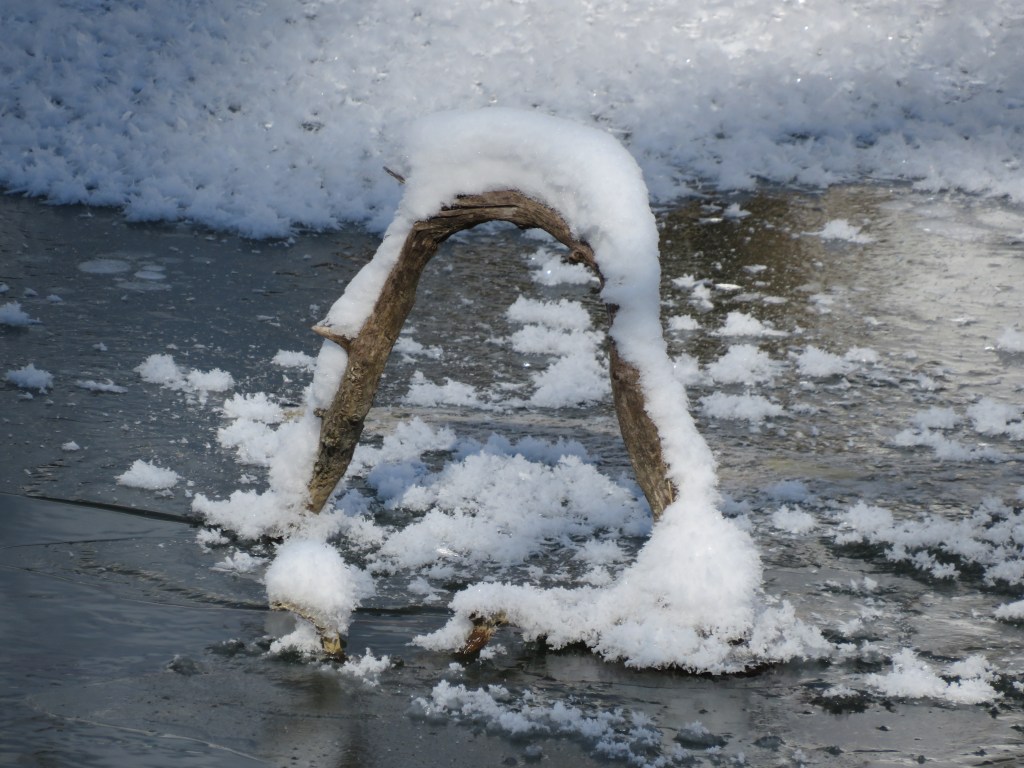
Sand Hill River, Polk County, MN. Photo by Danielle, February 2026.
All winter, I dream about wildflowers. Walking along the Sand Hill River, I wished for a miracle sprout of something tranquil and green. As each month of this year has passed, I’ve reflected on how I’ll soon be reunited with flowers. Clicking through hundreds of pictures, I zero in on the hues of petals and sepals. I need the homey embrace of my lawn chair and a mindless hour of sun.
Yesterday we drove east, looking for birds. We watched a pair of Trumpeter Swans (Cygnus buccinator) settle into a mud puddle. Our first Sandhill Cranes (Antigone Canadensis) of the year landed as a group in a dormant field. Their size and physical characteristics remind me of Big Bird from Sesame Street. We see Canada Geese (Branta canadensis) and an American Kestrel (Falco sparverius). An American Bald Eagle (Haliaeetus albicilla) sitting in a massive nest. At the Rydell National Wildlife Refuge, we find the big ponds still frozen over. But it’s nice enough to walk through the woods. Red squirrels bark and play in the treetops. While noisy and often destructive toward property, red squirrels are cute and exhibit entertaining behaviors. We see two squirrels chasing each other. One grunts: a sign of contentment.
I want to learn more about fungi, lichen, and mosses. I photograph a swath of moss spread across a mound of soil along the trail. Sometimes I draw cartoonish flowers on my iPad. Selecting the most appealing shade of green feels like an act of designing a dream flower. I’m paying more attention to the subtle variations in color in nature. I approach and inspect the moss, which sprouts little hairs like green eyelashes. Later, I learn that the moss is likely fire moss, Ceratodon purpureas, a common moss throughout Minnesota and the world. It’s sprouting across the surface of a humble dirt mound. Last fall, I photographed a spectacular log near Ely. It reminded me of a Chia pet, exploding with happy grasses and little plants.
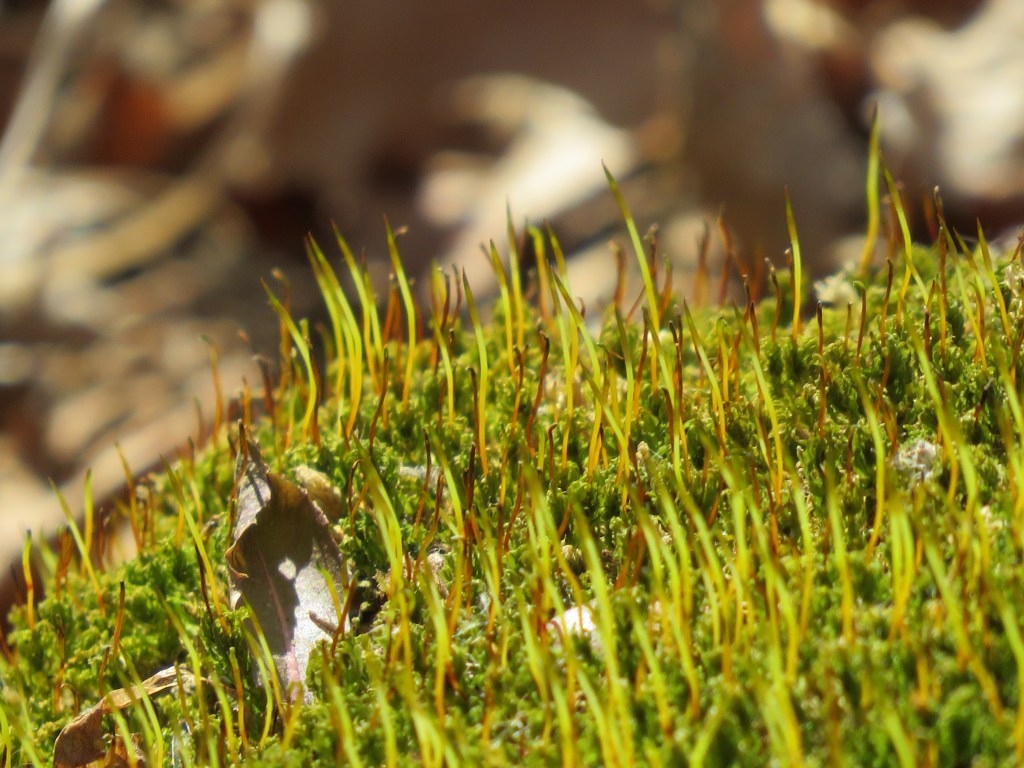
Fire moss, Ceratodon purpureas, Polk County, MN. Photo by Danielle, March 2026.
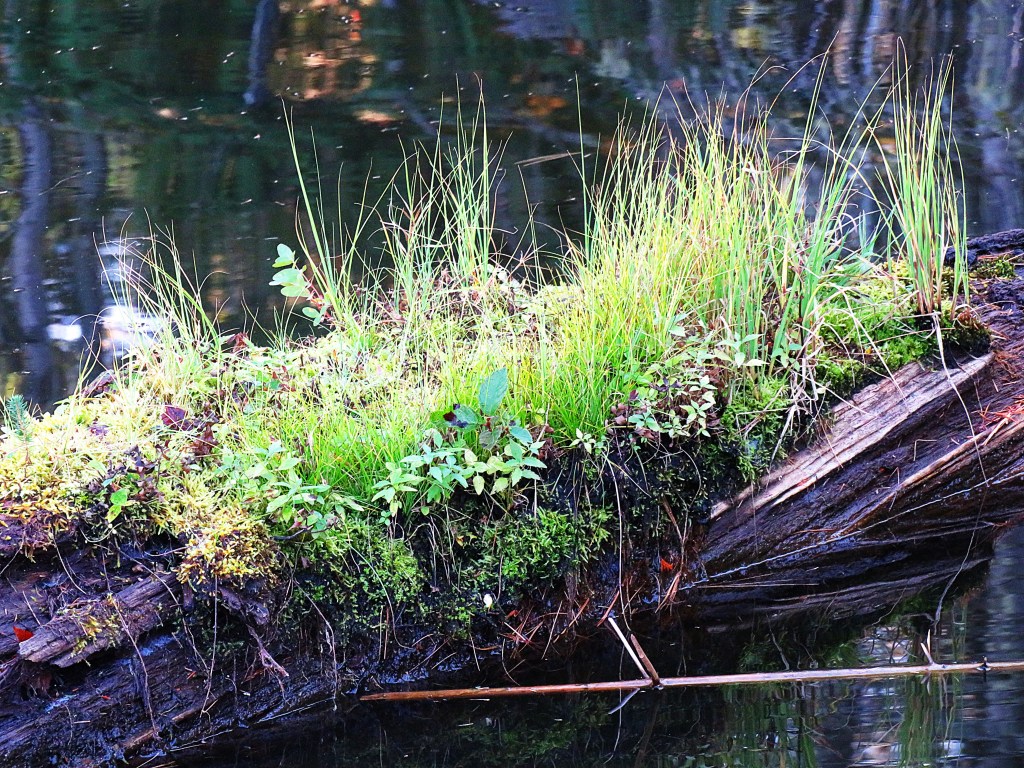
Mixed plants on log, Ely, MN. Photo by Danielle, October 2025.
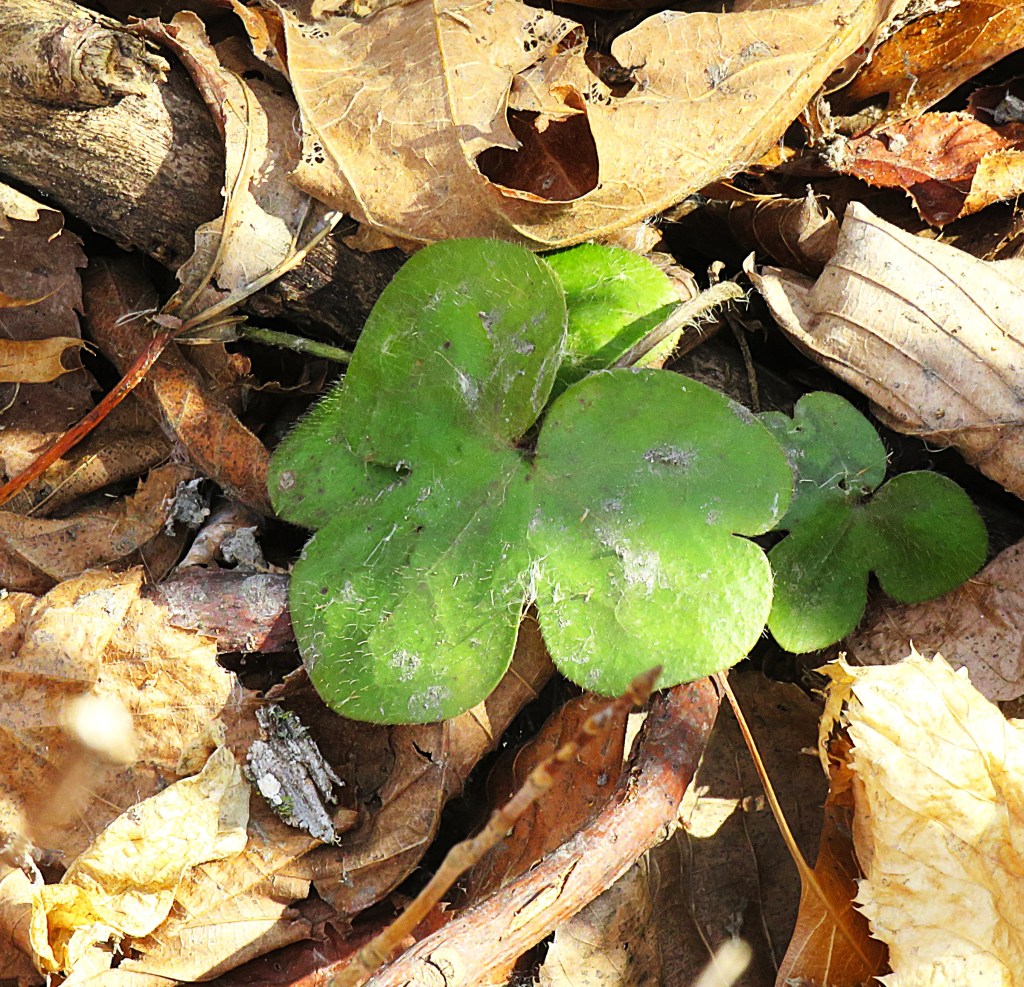
I notice a few green leaves. The leaves look like spring. I take a few pictures. They’re hairy and resemble oversized clovers. These are the leaves of one of the best spring beauties: Hepatica. We discovered Hepatica last spring, at Itasca State Park. The inspired, colorful flowers in purples and pinks bloomed everywhere. At Rydell, I see perhaps three or four plants, just beginning to emerge from the bed of last fall’s fallen leaves. I feel happy. I’m seeing flowers again.
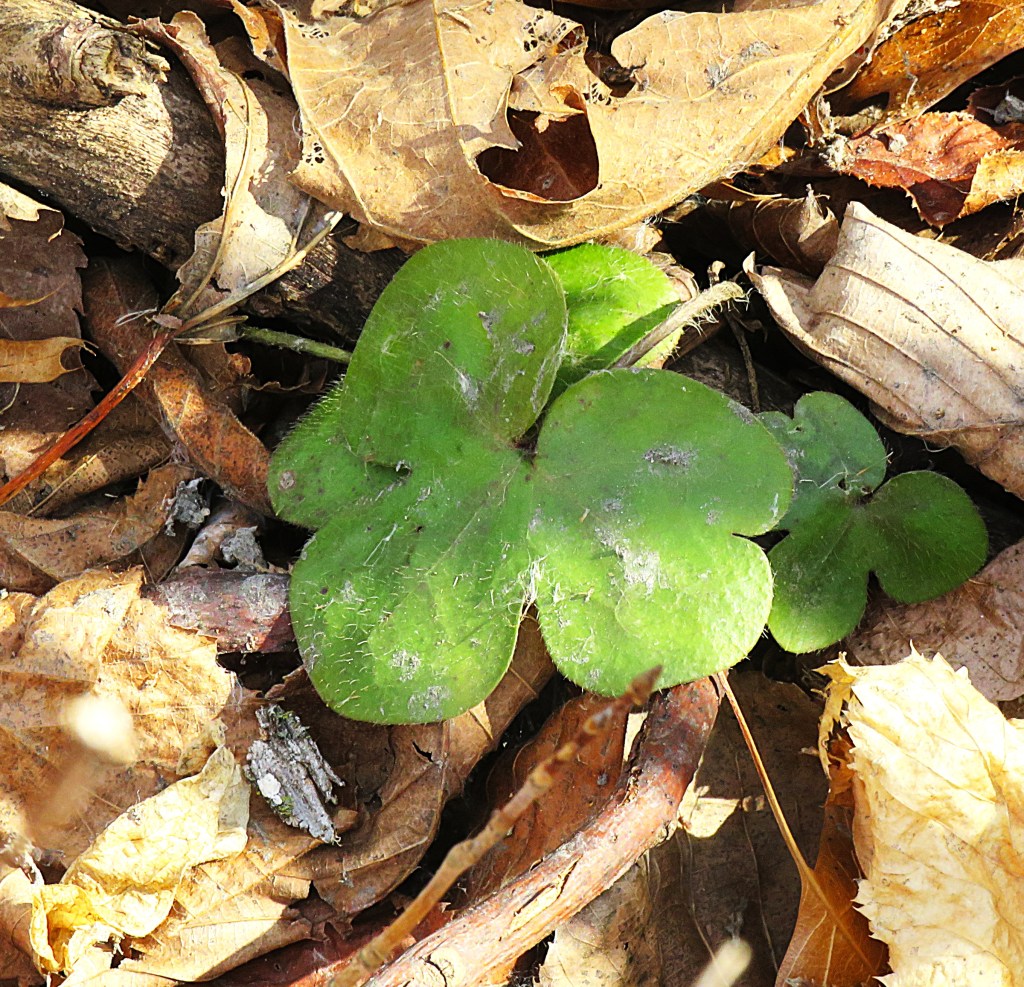
Leaves of Hepatica. Rydell National Wildlife Refuge, Polk County, MN. Photo by Danielle, March 2026.
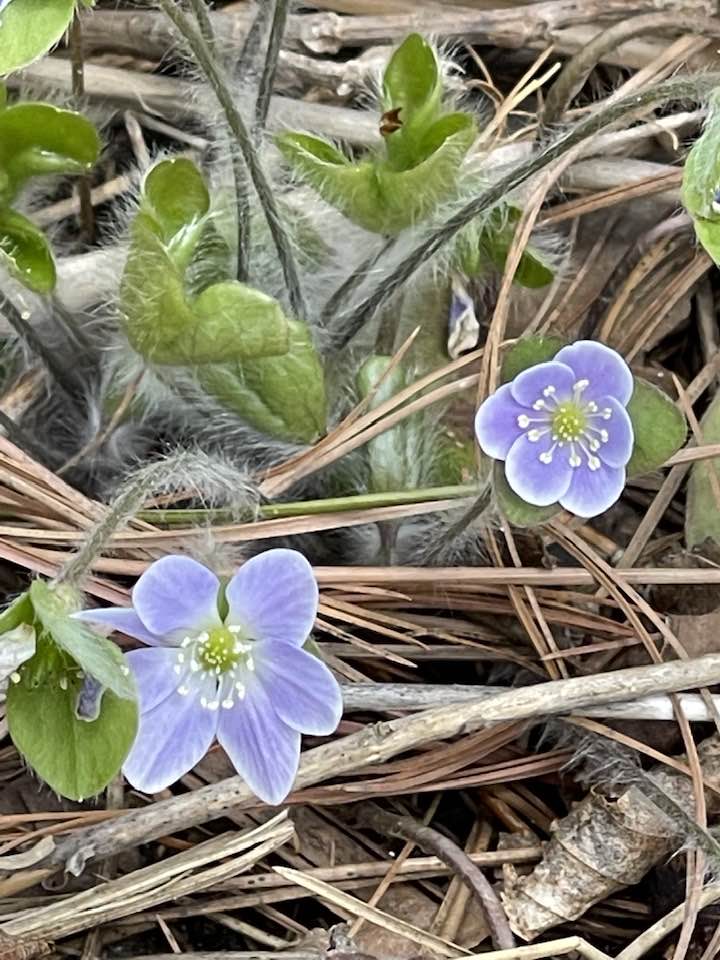
At right, Round-lobed Hepatica, Anemone americana, and at left, Sharp-lobed Hepatica, Hepatica acutiloba. Itasca State Park, MN. Photo by Danielle, May 2025.
So many wildflowers exhibit combinations of purples and greens. Purple and green is one of my favorite color combinations. Not surprisingly, shades of green in legend and myth often symbolize growth, life, and renewal. I think of the “Green Man” feature of art and design, where a human face is comprised entirely of leaves and other vegetation. In my first college English class, we read Sir Gawain and the Green Knight. We studied questions about the significance of green in the mysterious knight’s identity. Solving the scholarly puzzles of literature was one of the reasons I wanted to become a professor. I think about writing a modern version of Jack and the Beanstalk.
I learn from the Missouri Department of Conservation that Hepatica comes from the word for “liver,” and the plant is sometimes called “liverleaf.” Many years ago, I picked up a book by Julia Graves about the “doctrine of signatures,” an ancient approach to plants rooted in the belief that if parts of the plant resembled human body parts, the plant might be useful in aiding those body parts. Because the colors of the clover-like leaves turn to a livery color in winter, the plant was thought to be helpful for a functioning liver. Hepatica are also anemones, which I’ve come to enjoy as lovely, happy flowers with simple shapes like I might draw with colorful markers in the margins of a wirebound notebook.
We see signs of life everywhere. An impressive beaver lodge overlooks a frozen pond. There’s evidence of activity, with tree stumps bearing the teeth marks of the beaver. We’ve never seen a beaver in the wild. I take a few pictures of lichens on tree bark. The colors remind me of paint chips. Later, I obsessively read about lichen, learning about how it grows on every continent. Lichens grow nearly everywhere and appear in various colors. Symbiosis, a cohabitation of different living things, captures how lichens function alongside other organisms. Growing on trees, gravestones, walls, and other surfaces, lichens can resemble crusts, mosses, or even powders.
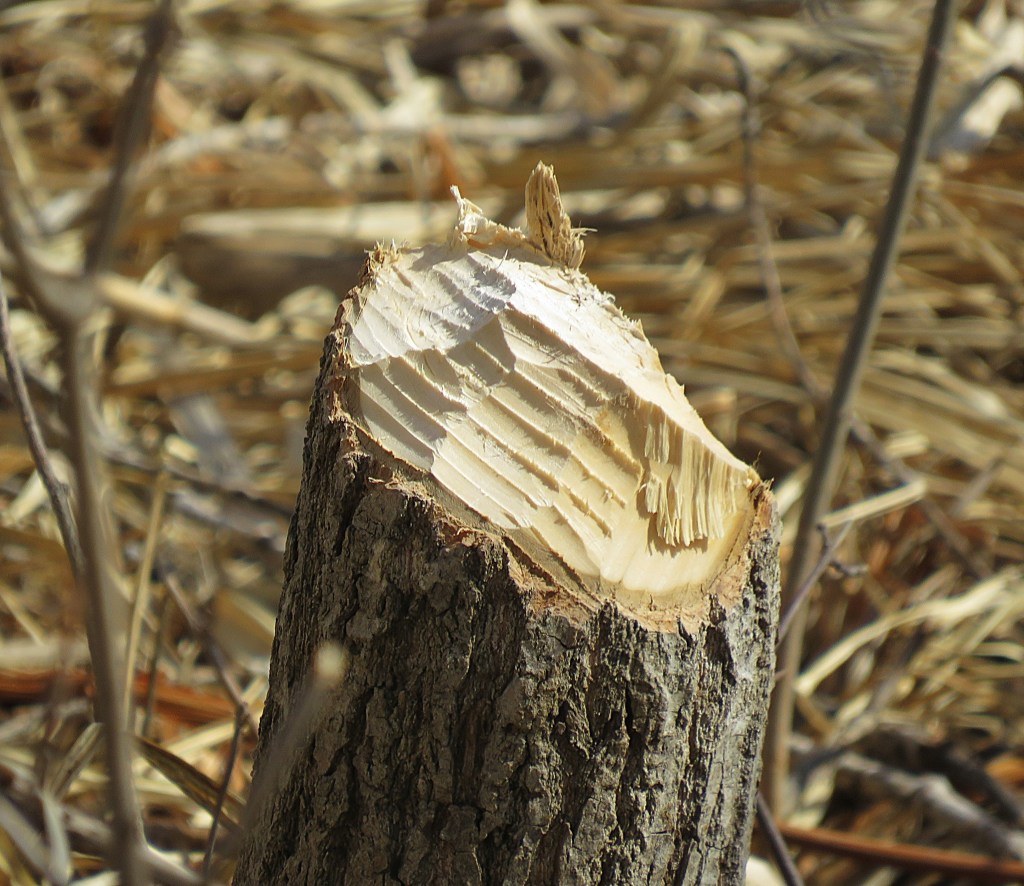
Tree felled by North American Beaver, Castor Canadensis, Rydell National Wildlife Refuge, Polk County, MN. Photo by Danielle, March 2026.
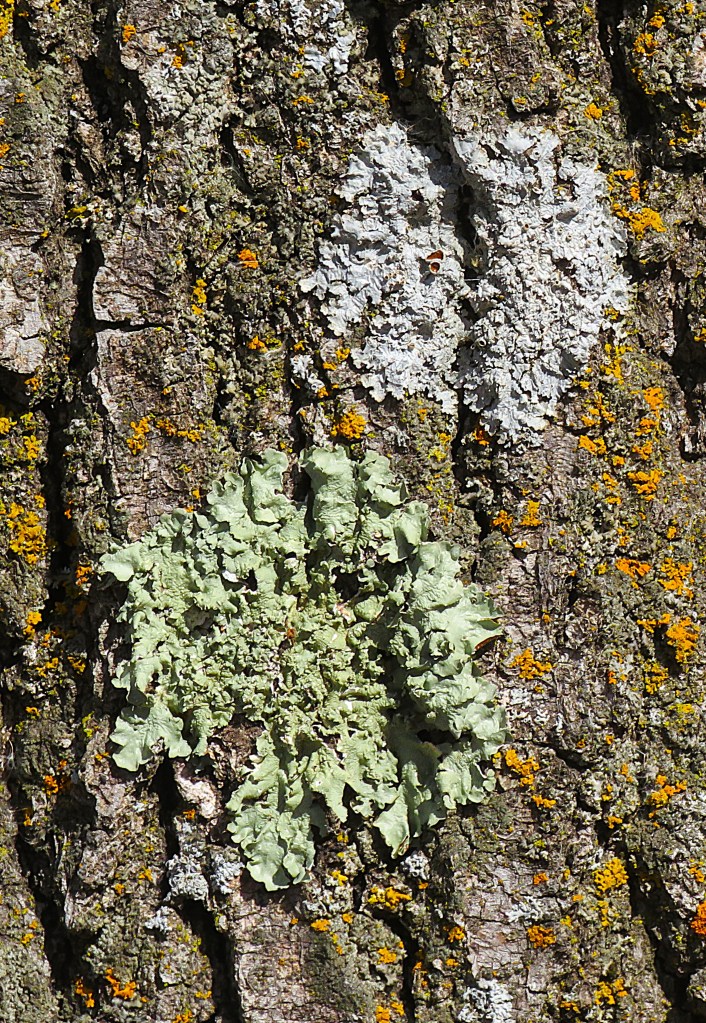
Folious lichens on tree bark. Rydell National Wildlife Refuge, Polk County, MN. Photo by Danielle, March 2026.
Back home, our hound and I scroll through the photos, talking about which state parks we want to visit this year. Setting goals has always helped me in life, but in the last year or so I’ve tried to put less pressure on myself to “achieve” things. I sleep better at night and spend more time with our hound. I scratch his neck roll and he grunts in contentment. He dreams of playing ball in his backyard. I set a warm goal of feeling the golden sun. Soon the spring violets will pop up at the base of the fence and we’ll hear the songs of the warblers.
 Danielle Dreams in Wildflowers
Leave a comment